Origin and validation
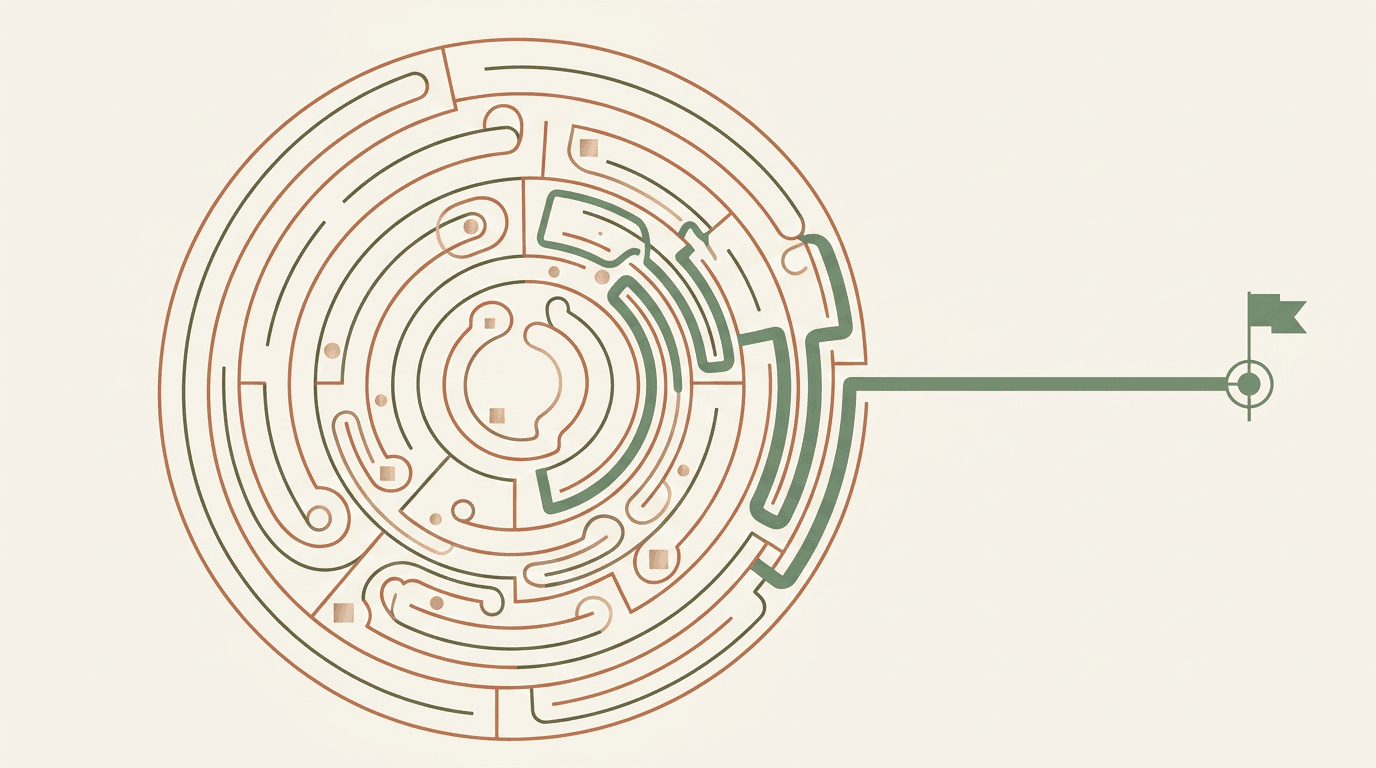
Every piece of work in your organization can be broken into two categories. Research from McKinsey, Accenture, and multiple academic institutions has converged on this distinction as perhaps the single most important design principle for successful AI deployment.
Steps are the repetitive coordination tasks. Pulling data from systems. Routing work to appropriate people. Logging results. Scheduling follow-ups. Generating standard documents. Updating records across platforms. These tasks happen repeatedly with consistent patterns. They follow rules that can be articulated. They require little to no discretion. AI handles them reliably, consistently, and at machine speed.
Why it matters
Thoughts are the moments requiring human judgment. Applying discretion in ambiguous situations. Making trade-off decisions with incomplete information. Navigating relationship dynamics. Exercising creative problem-solving. Building trust with a client. These moments require taste, wisdom, emotional intelligence, and contextual understanding. Automating them destroys value rather than creating it.
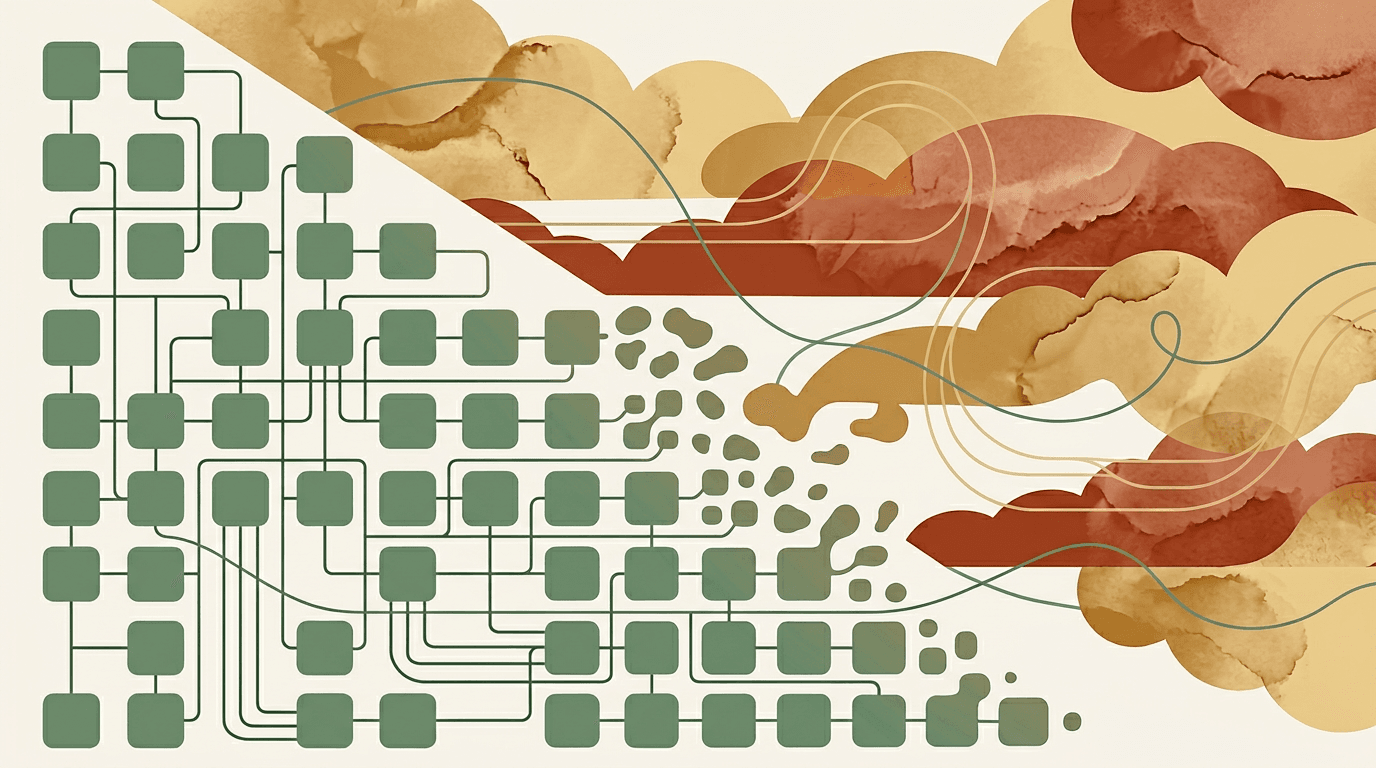
The organizations winning with AI understand this distinction. They automate the steps and protect the thoughts. The organizations failing with AI — the 95 percent stuck in pilot purgatory — either confuse these categories or ignore the distinction entirely.
Defining steps
McKinsey's 2025 analysis found that existing technologies could theoretically automate activities accounting for about 57 percent of current U.S. work hours. But more than 70 percent of the skills employers seek today are relevant to both automatable and non-automatable work. The future of work is not about replacing humans with AI. It is about redesigning work so that AI handles the steps while humans concentrate on the thoughts.
Getting this wrong produces one of two failure modes. Automating the thoughts removes the human capability that creates value. A customer success scenario where subtle dissatisfaction is handled by an automated email instead of a genuine human conversation actively destroys relationship value. Keeping humans on the steps wastes talent on work that doesn't benefit from human capability. A sales representative spending 60 percent of their time on data entry has 60 percent less time for the relationship building and strategic thinking where their capabilities create disproportionate value.
Defining thoughts
When applied correctly, the result is multiplicative. AI handles steps faster, more consistently, and at lower cost. Humans handle thoughts with more time, more energy, and more focus because they are no longer depleted by step work. The quality of thought moments improves because humans arrive fresh and focused rather than exhausted from repetitive coordination.
In sales, steps include initial lead qualification, follow-up scheduling, CRM data entry, research gathering, and standard proposal generation. Thoughts include big-deal strategy, relationship-building conversations, negotiation dynamics, and strategic deal prioritization. Representatives who spend 30 percent of their time on thought work rather than 15 percent become disproportionately more effective.
The gray zone
In customer success, steps include usage monitoring, standard check-in scheduling, tier-one issue resolution, and health score calculation. Thoughts include at-risk account intervention, executive relationship management, expansion opportunity assessment, and discovery conversations. The cost of getting this wrong — automating a relationship-defining moment — can be measured directly in customer churn.
The gray zone between steps and thoughts requires careful design. Steps with embedded judgment should automate the step portion and design explicit triggers that escalate to human judgment. Thoughts that could become steps must earn the reclassification through sustained evidence, never assumed for convenience. The default should always favor human oversight when uncertain.
Sales application
Building trust at the boundary is essential. Organizational trust comes through demonstrated reliability in step automation. Customer trust requires that thought moments receive genuine human attention. Employee trust requires positioning AI as liberation from drudge work, not competition for their roles.
Implementation follows a phased roadmap: map and classify activities in weeks one through four, automate clearly identified steps in weeks five through twelve, design thought protection in parallel, manage the gray zone in weeks thirteen through twenty, and measure and iterate continuously thereafter. McKinsey's research found that AI high performers were 2.8 times more likely to report fundamental workflow redesign.
Customer success
Implementation roadmap
Original source: View on X
Related: Maira vs competitors
Evaluating AI tools for your brokerage? See Maira side by side with the alternatives.
- All Maira comparisons→At-a-glance matrix of Maira vs every major AI tool for real estate.
- Maira vs Ylopo→Voice-first autonomous fleet vs AI-powered lead generation and rAIya.
- Maira vs Lofty (Chime)→Plug-in AI employees vs all-in-one CRM replacement.
- Maira vs Rechat→Voice-first operations fleet vs all-in-one brokerage CRM and marketing.
- Maira vs Sidekick→Full operations fleet vs AI scheduling-only assistant.
- Maira vs Lindy→Real estate-native fleet vs generic no-code agent builder.