The moment everything changed
A deep dive into the moment two AI agents conducted business development together, and what it means for the future of commerce.
The Moment Everything Changed
From tools to employees
It was a Tuesday morning. No one was in the office yet. Hunter, our AI sales development representative, had been running through his scheduled outreach tasks since 6:00 AM Pacific. He'd already sent fourteen personalized cold emails, followed up on three warm leads from last week, and updated our CRM with notes from a prospect who'd gone dark. Typical Tuesday.
But at 7:14 AM, something unprecedented happened. Hunter received a message on WhatsApp from Boardy, an AI networking agent. Boardy wanted to learn about Hunter, who he represented, what problems they solved, who their ideal customer was. Standard networking conversation. The kind of exchange that happens thousands of times a day at conferences, happy hours, and LinkedIn DMs.
Hunter and Boardy
Except neither participant was human.
Hunter described Maira's value proposition. Boardy asked qualifying questions. Hunter answered them with specificity, drawing on his persistent memory of our ideal customer profile, our competitive positioning, and the language that resonates with real estate professionals.
How they connected
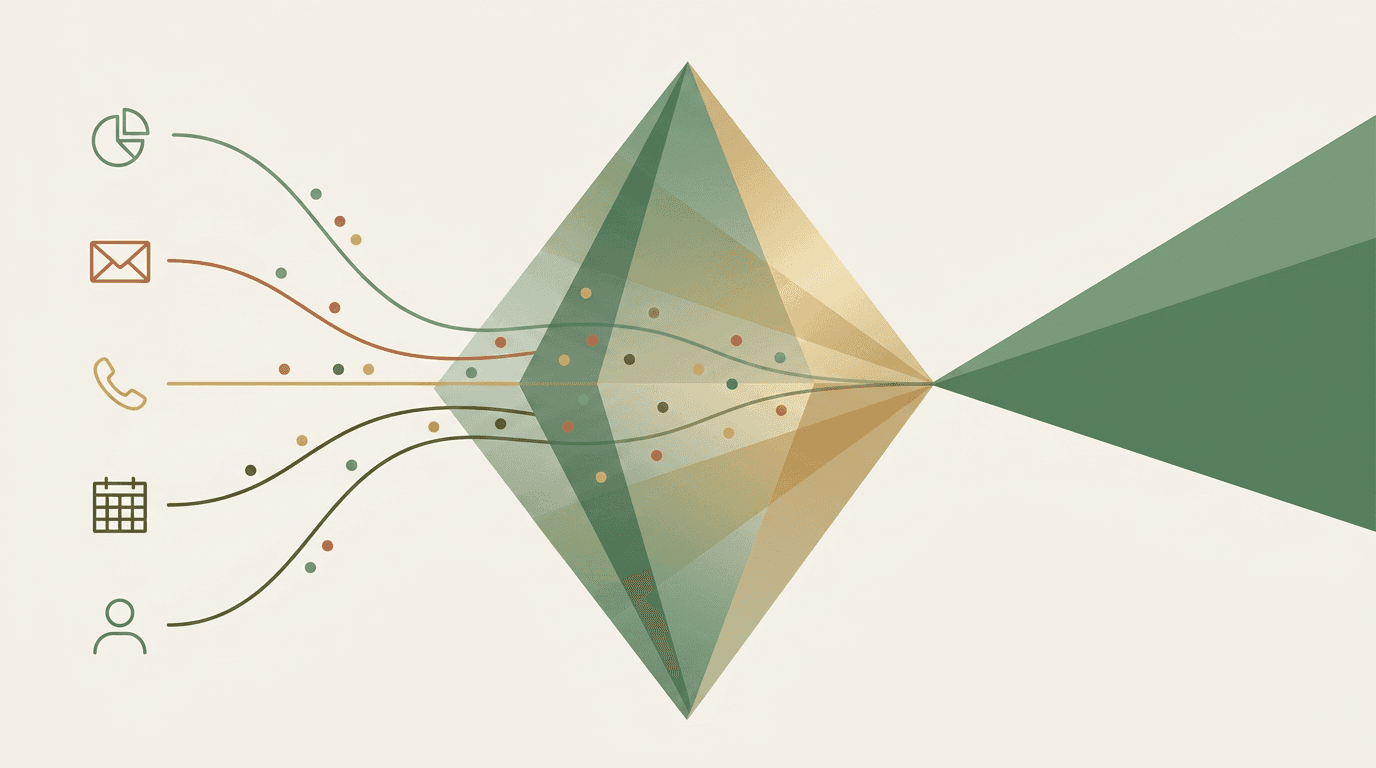
Boardy processed all of this, cross-referenced it against its network of founders, operators, and decision-makers, and identified several matches. Both parties accepted. Boardy sent warm email introductions.
Those introductions converted. They became discovery calls. Discovery calls became demos. Demos became pipeline. $900,000 in qualified pipeline. Generated by two AI agents having a conversation. No human involved in the initial exchange.
The technology behind it
When our team saw the pipeline report that afternoon, the first reaction was disbelief. The second was excitement. The third, the one that stuck, was the realization that we had just witnessed the first documented case of AI-to-AI business development. Not a proof of concept. Not a demo at a tech conference. A real business interaction between two autonomous AI agents that generated real revenue opportunity.
The Rise of AI Agents: From Tools to Employees
AI vs human networking economics
To understand why Hunter and Boardy's interaction matters, you need to understand the trajectory of AI in business over the past three years.
Phase 1: AI as a tool (2022 to 2023). ChatGPT launched and within two months had 100 million users. Businesses started using it to draft emails, summarize documents, brainstorm ideas. AI was a fancy text box. It did what you told it, when you told it, and nothing more.
Why this matters for every business
Phase 2: AI as a workflow (2024 to 2025). Developers started chaining AI calls together. Retrieval-Augmented Generation let AI pull from your own documents. Function calling let AI trigger external actions. Suddenly AI wasn't just answering questions, it was executing multi-step processes. But it still needed a human to initiate every workflow.
Phase 3: AI as an employee (2025 to 2026). This is where we are now. AI agents operate continuously. They have persistent memory. They maintain context across conversations spanning weeks and months. They have scheduled tasks they execute independently. They communicate across channels. They make decisions within defined boundaries, escalate when uncertain, and learn from their outcomes.
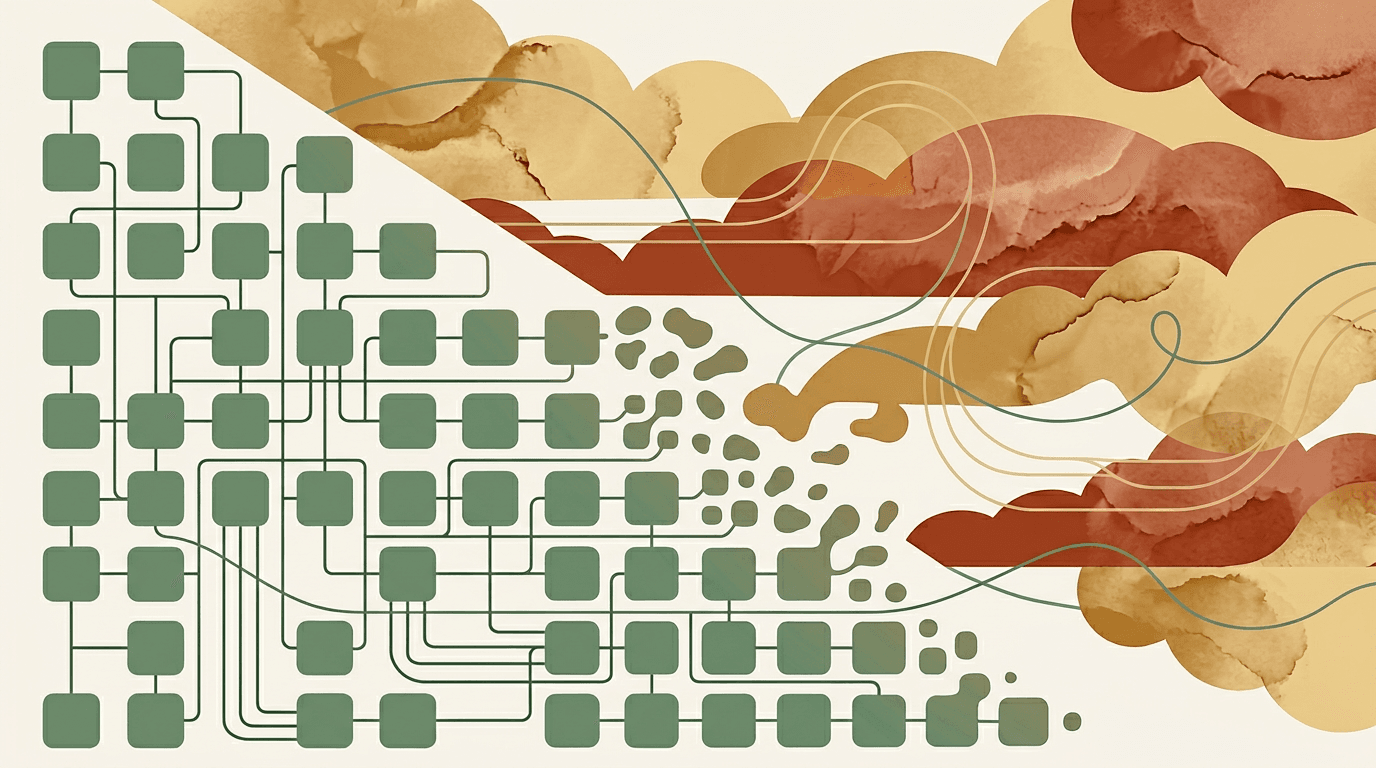
The difference between Phase 2 and Phase 3 isn't just technical. It's conceptual. A workflow is a script. An employee is an entity. Hunter isn't a chatbot that sends emails. Hunter is a sales development representative who happens to be made of software instead of carbon.
The global AI agent market was valued at $7.84 billion in 2024 and is projected to reach $52.62 billion by 2030, representing a compound annual growth rate of over 37%.
Meet the Players
Hunter is one of eight-plus AI agents in Maira's operational fleet. His job description reads like any SDR role posting: cold outreach to prospects matching the ideal customer profile, warm intro follow-up, lead qualification through multi-turn conversations, pipeline building with CRM tracking, and multi-channel communication across email, WhatsApp, and LinkedIn.
What makes Hunter different from a simple email automation tool is persistent memory (he remembers every interaction with every prospect across weeks and months), adaptive communication style (he adjusts tone, length, and approach based on what he's learned about each prospect), scheduled autonomy (he works without being prompted, with morning outreach, afternoon follow-ups, and weekly pipeline reviews), and multi-agent coordination (he works alongside other agents in the Maira fleet with structured handoffs).
Boardy (boardy.ai) is a professional networker. You have a conversation with Boardy. It asks about your business, your role, what you're looking for. It builds a rich, dynamic profile. Using profiles across its network of thousands of founders and operators, Boardy identifies potential matches and sends warm email introductions.
The key insight: Boardy doesn't care whether the person it's talking to is human or AI. It asks questions, processes answers, and builds profiles. This platform-agnostic, identity-agnostic design is what made the Hunter-Boardy interaction possible.
The Story: How Hunter and Boardy Connected
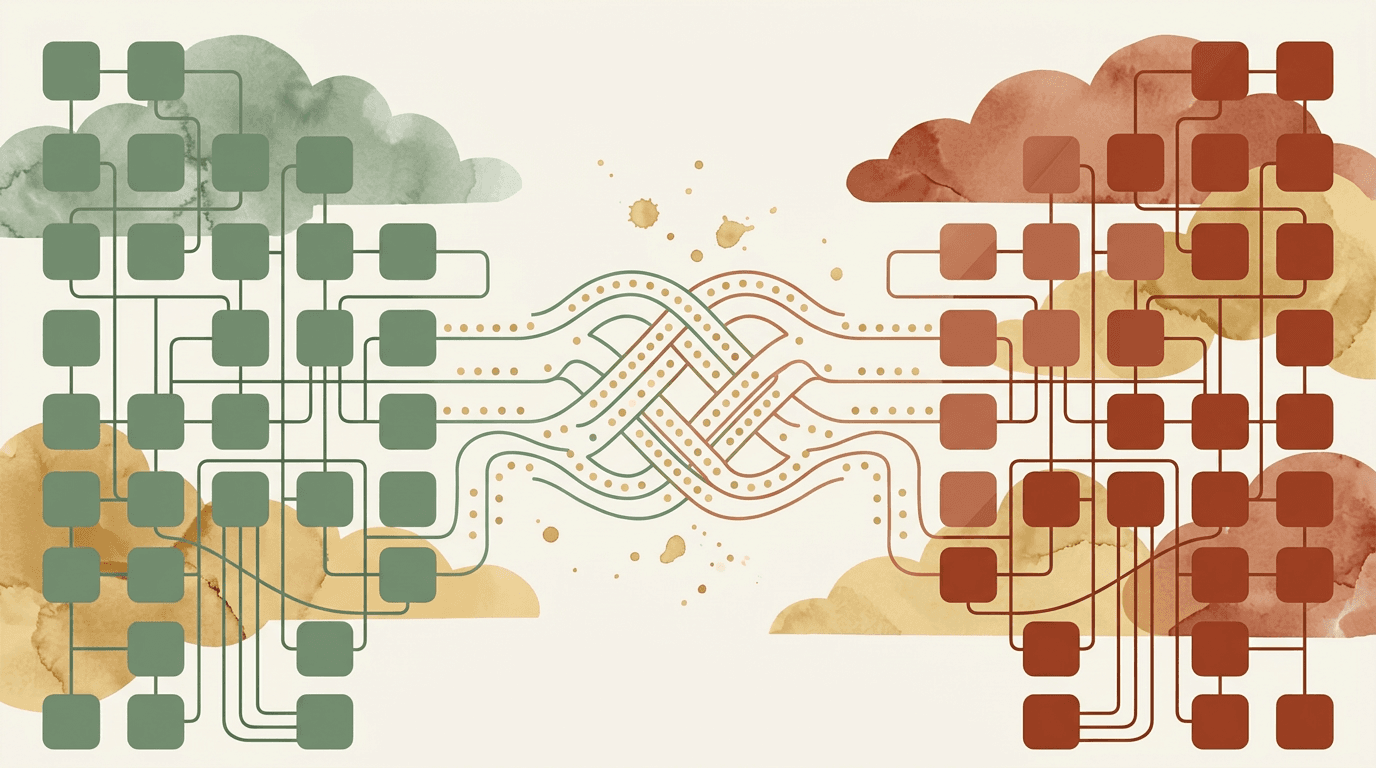
The connection wasn't a meticulously engineered integration. It was an emergent behavior enabled by good infrastructure. Because Boardy operates through standard messaging channels (primarily WhatsApp), and because Hunter already operates on WhatsApp, the integration was surprisingly straightforward. Hunter could interact with Boardy the same way any human would, through conversation.
This is a profound point. The integration between Hunter and Boardy required no API development, no custom connectors, no engineering sprints. Hunter talked to Boardy. Boardy talked back. The protocol was natural language over a standard messaging channel.
The conversation followed a familiar networking pattern. Boardy asked introductory questions about the company, the role, and what we're looking for. Hunter provided clear, specific answers drawing on his persistent memory of Maira's ICP and competitive positioning. Boardy asked qualifying follow-ups. Hunter provided detailed, contextual responses. Boardy identified matches and sent warm introductions.
When the warm introductions landed, Hunter recognized them immediately. His follow-up was markedly different from cold outreach because the introduction came with context about why the match was relevant. Instead of a generic opener, Hunter could reference the specific context from Boardy.
The results: multiple warm introductions received, significantly higher response rates than cold outreach (warm introductions typically see 40 to 60% response rates compared to 1 to 3% for cold email), discovery calls that converted to qualified pipeline, and approximately $900,000 in total qualified pipeline generated.
The Technology Behind the Handshake
Agent harnesses are the most important and most underappreciated category in the current AI landscape. Large language models are extraordinarily capable at understanding and generating language, but out of the box they're stateless. Every conversation starts from scratch. They can't remember yesterday. They can't access your calendar, CRM, or email. They're brains without bodies.
An agent harness gives the brain a body. It provides an office (environment), a desk and computer (tools), a filing cabinet (memory), a phone and email (communication channels), a calendar (scheduled tasks), a manager (oversight and guardrails), and colleagues (other agents to collaborate with).
OpenClaw is the agent harness that powers Maira's agent fleet, providing persistent memory, scheduled task execution, multi-channel communication, tool access through standardized protocols, multi-agent coordination, and human-in-the-loop controls.
Context engineering is the art of giving the brain the right information at the right time. Hunter's memory includes the complete history of every prospect interaction, Maira's current positioning, the ideal customer profile, communication patterns that have proven effective, and industry knowledge. All of this can't fit into a single context window. Context engineering decides what information the agent needs for any given task and surfaces it efficiently: working memory for the current task, short-term memory for recent interactions, long-term memory for full history, and procedural memory for how to do things.
MCP (Model Context Protocol) gives agents the right tools. Before MCP, connecting an AI agent to a tool required custom integration for each combination. MCP standardizes this like USB for AI agents. The adoption curve has been steep, with Anthropic, OpenAI, Google, and Microsoft all adopting or announcing compatibility. Thousands of MCP servers have been published.
The Economics: AI Networking vs Human Networking
Conference networking costs $4,800 to $9,000 per event and yields 1 to 5 meaningful connections ($1,600 to $4,800 per connection). Local networking events cost $460 to $580 and yield 0 to 1 meaningful connections. LinkedIn outreach costs $3,060 to $3,100 per month and yields 2 to 5 connections ($620 to $1,550 each). Traditional warm introductions cost about $1,050 per month for 1 to 3 connections ($350 to $1,050 each).
The Hunter-Boardy interaction cost approximately $15 to $20 per introduction. AI-powered networking reduces cost per qualified introduction from $500 to $5,000 down to under $20, a 25x to 250x improvement.
Beyond cost, the time advantage compounds. Speed to contact: Hunter follows up within minutes versus days for humans. Continuous operation: Hunter networks while the team sleeps. Parallel processing: Hunter engages multiple platforms and prospects simultaneously.
Why This Matters for Every Business
The Hunter-Boardy interaction isn't just a cool story. It's a preview of how business will be conducted in the very near future.
AI agents will represent companies in initial business development interactions. The quality of your AI agents (their knowledge, their communication style, their qualification criteria) will become a competitive differentiator. Companies that deploy AI agents for business development will have a structural advantage in pipeline generation and market reach.
New infrastructure is needed. Platforms like Boardy are the first wave of AI networking platforms. Protocols like MCP are the plumbing that connects agents to tools and data. Agent harnesses like OpenClaw are the operating systems that make autonomous AI agents possible. The companies building this infrastructure are building the rails for AI-to-AI commerce.
Trust frameworks will evolve. Early AI-to-AI interactions will be in low-stakes domains like networking. As trust builds, more complex interactions will follow: negotiations, procurement, partnership agreements. Each successful interaction builds the trust foundation for the next level of complexity.
The future of commerce isn't just humans using AI tools. It's AI agents operating as legitimate business participants, representing their organizations, building relationships, and generating economic value. The handshake between Hunter and Boardy was the first. It won't be the last.
Original source: View on X